
 Kick Start Your Accounting Journey, We Help You to Start from Scratch
Zoho ERP vs NetSuite
Selecting the correct Enterprise Resource Planning (ERP) solution is a decisive process for any organization. An ERP system centralizes business processes. ERP, or enterprise resource planning, integrates core business functions including finance, inventory, sales, human resources, and operations into a single solution. While many cloud-based ERP solutions are available today, Zoho ERP and NetSuite are two prominent options.
While both platforms have powerful capabilities, they are best suited for different types of businesses and delivery needs. Know that choosing the right solution ultimately comes down to company size, the type of needs you have, and your ambitions for scaling as a company, so knowing the core differences will help you choose the right path.
What Is Zoho ERP?
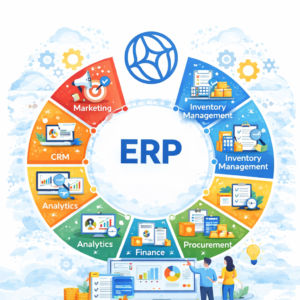
Zoho ERP is designed to simplify business operations for small and mid-sized businesses. Zoho ERP is a fully integrated enterprise resource planning system designed for mid-to-large businesses that require centralized control over finance, operations, supply chain, manufacturing, inventory, HR, and analytics, all within a single unified platform.
These additional features are easy to add and inexpensive, which is one of Zoho ERP’s biggest strengths. It is comprised of various modules, which can be chosen as per the business requirements, and can seamlessly be integrated. This modular and scalable solution has a “pay-as-you-grow” model appealing to start-ups and scaling companies looking for flexible solutions with minimal CAPEX.
Businesses opting for Zoho ERP usually have the following requirements:
- Easy implementation and quick setup
- Cost-effective automation tools
- Basic to moderate operational management
- Scalable solutions for growing companies
What Is NetSuite ERP?
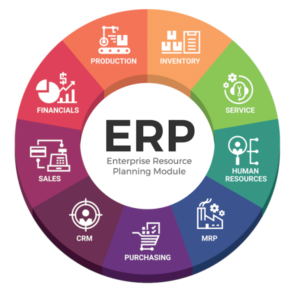
NetSuite offers a cloud-based enterprise resource planning solution that is specifically tailored for mid-sized to large companies. NetSuite provides an all-in-one solution that covers finance, supply chain management, procurement, inventory management, customer management and advanced analytics.
While NetSuite has very strong reporting capabilities and deep functionality, it handles multi-entity organizations, global operations and complex workflows, so it is more appropriate for companies who have more mature business needs.
Businesses typically choose NetSuite ERP when they require:
- Advanced financial management and reporting
- Readiness for worldwide and multi-subsidiary usage
- Strong automation and workflow capabilities
- Comprehensive business intelligence tools
- Comparison of Zoho ERP vs NetSuite
Target Business Size
The main difference is the kind of organization they are designed to assist. For small to mid-sized businesses, those with a simple touch of automation and flexibility, Zoho ERP is suited for small to mid-sized businesses seeking automation and flexibility. Conversely, NetSuite is for large or scaling businesses with complex operational needs.
Features and Functional Depth
NetSuite’s all-in-one feature set is wider and deeper than Zoho ERPs. These offerings include enhanced financial planning, real-time analytics, and supply chain capabilities.
Overall Zoho ERP provides a strong foundation for core business operations and is best suited for moderately complex requirements.
Cost and Implementation
Overall, Zoho ERP tends to be less expensive and provides a more straightforward implementation process. It is simple to deploy for many businesses, without major IT manpower or unique technical expertise needed.
NetSuite comes with higher subscription costs and a more complex implementation process. However, NetSuite comes with enterprise-level pricing and offers greater scalability.
Customization and Integration
While both provide functionality for customization, NetSuite has far more sophisticated tools for specialized integrations and enterprise-level processes.
Zoho ERP is also flexible, especially with its APIs and built-in integrations, although extensive customization may require some additional development work.
Scalability
From the perspective of an SME, Zoho ERP offers scalability, which means that as the organizations grow, modules can be added. NetSuite: Scalable for the Long Haul NetSuite offers long-term scalability right out of the box, supporting multinational operations and high transaction volumes.
Which ERP Should You Choose?
Of course, which one will work the best, will depend on the size, budget, and complexity of your operation.
Choose Zoho ERP if:
- Owner of a small or medium-sized business
- Therefore, you want a very simple and affordable solution
- Your workflows are simple enough
- You prefer modular tools — the ones that evolve with you as you grow
Choose NetSuite ERP if:
- Your organization is complicated · Your ops are complex
- You require complex financial reporting and analysis
- Your scope of responsibility includes diverse entities or international operations
- You are equipped for robust expansion opportunities moving forward
Conclusion
Although Zoho ERP and NetSuite are both capable and mature cloud-based solutions, the disparate requirements of these two solutions vary considerably amongst enterprises. Zoho ERP wins in pricing, flexibility, and ease for growing businesses. Regarding maturity, nothing comes close to NetSuite in terms of functionality, scalability, and enterprise position.
Choose the solution that best aligns with your operational needs, budget, and long-term growth strategy.
Frequently Asked Questions (FAQs)
Is Zoho ERP suitable for large enterprises?
Although Zoho ERP will meet the needs of fast-growing businesses, larger businesses and those with a more complex process often require a more comprehensive solution like NetSuite.
Which ERP is more affordable?
So, many startups and small to mid-sized organizations specially expect Zoho ERP simply since it is usually inexpensive.
Can either system integrate with other business tools?
Both Zoho ERP and NetSuite provide flexibility in integrations, based on APIs and native connectors, but NetSuite is generally considered to provide a more enterprise-grade integration capability.
More Implementable ERP – Which ERP is easier to implement?
Deployment: Zoho ERP can be deployed faster and more easily as opposed to NetSuite, which requires more planning, configuration and technical expertise for implementation.